
By Elena Rodriguez • RPG Specialist
Published: October 20 2026 | Reading time: ~5 min
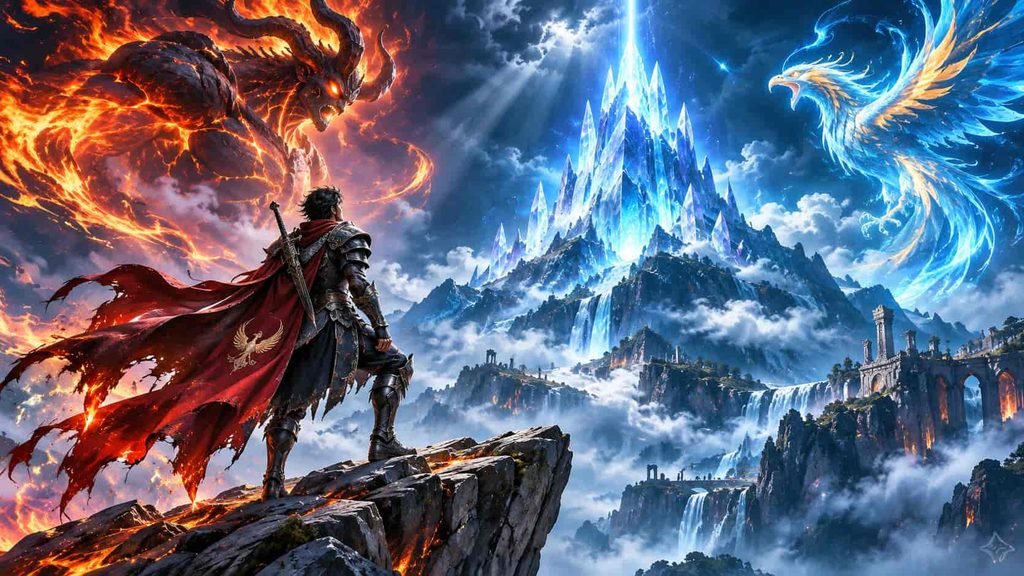
Quick Summary: Final Fantasy XVI review after 60+ hours on PS5: bold action combat, eight incredible Eikon boss fights, Active Time Lore, and both DLC expansions. Score: 8.5/10.
Key Takeaways
Quick summary before you read on:
- Combat: DMC-style action with 8 Eikon ability sets, not turn-based.
- Story: Mature revenge plot through Valisthea’s Mothercrystal politics.
- Active Time Lore: Pause anytime to read character bios and plot recaps.
- DLC: Echoes of the Fallen and The Rising Tide add ~10 hours of content total.
- Score: 8.5/10 — Features the best Eikon fights in the series, but side quests feel MMO-style.
Introduction: A Hard Pivot for the Franchise
I finished Final Fantasy XVI on PS5 in 47 hours, then immediately rolled into New Game+ on Final Fantasy mode for another 15. By the time the credits rolled the second time, I had also cleared both DLC expansions and platinumed the base game. That should tell you where I land on this one: I loved it, even when it frustrated me.
FF16 is a hard pivot for the franchise. Creative Business Unit III, the FFXIV team led by producer Naoki Yoshida and director Hiroshi Minagawa, threw out the turn-based combat that defined 35 years of Final Fantasy and shipped a character-action RPG. That gamble is what this review is really about.
Released on June 22, 2023, as a PS5 exclusive (with the PC port hitting Steam and Epic on September 17, 2024), it sold 3 million units in the first three days and 3.5 million by the end of 2023. As someone who has been playing Final Fantasy since the SNES entries, I came in skeptical. Here is where the reinvention lands, and where it does not.
Gameplay & Combat
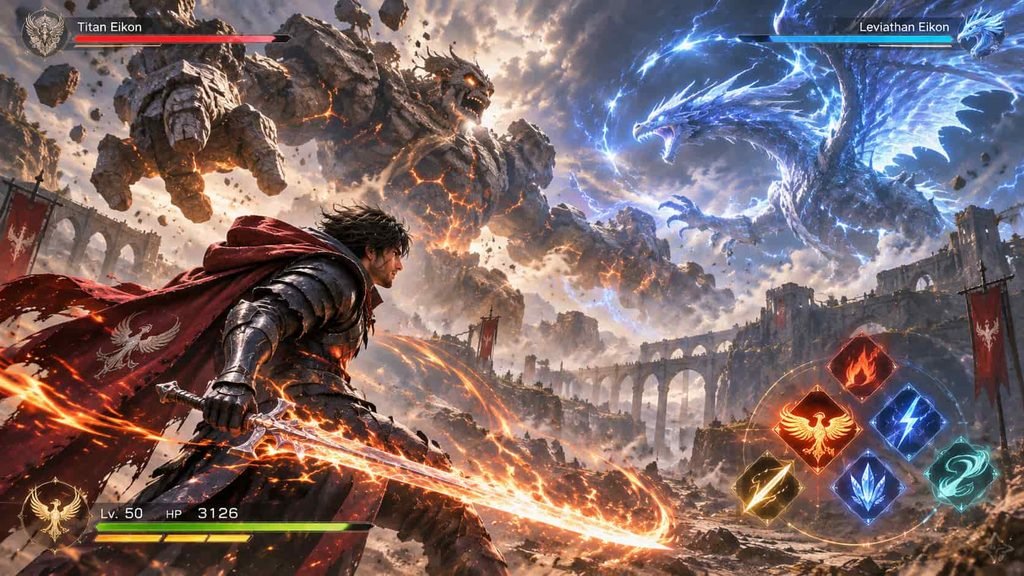
You play as Clive Rosfield, alone, for the vast majority of FF16. There is no party system like FF7 Remake’s; Torgal the wolf is your only persistent companion. Combat is purely action, designed by Kazutoyo Maehiro, with Hideaki Itsuno (Dragon’s Dogma) advising on the feel.
The Eikon Ability System
The result sits between Devil May Cry’s depth and FF7R’s accessibility. You have a basic combo, four Eikon abilities mapped to face buttons, and a precision dodge that slows time on a perfect window.
What makes the combat truly land is the Eikon ability swapping. Mid-fight, you can swap between the following abilities:
- Phoenix: Mobility
- Garuda: Crowd control
- Titan: Parry stance
- Ramuh: Ranged attacks
- Bahamut: Mega damage
- Shiva: Combo extender
- Odin: Parry-to-charge
Each Eikon also has a unique big attack — Odin’s Zantetsuken is the most satisfying thing I have pressed on a DualSense this generation. The eight Eikon boss fights (Ifrit, Phoenix, Titan, Garuda, Ramuh, Bahamut, Shiva, and Odin) are the headline. Each one shifts genre: Titan is a wrestling match, Bahamut is a shoot-’em-up, and Shiva is a versus fighter. These are the best set-pieces in any Final Fantasy, full stop.
Active Time Lore & Difficulty
The Active Time Lore (ATL) system is the unsung hero. Hit the touchpad mid-cutscene and you get character bios, location history, and a current plot recap. For a series famous for confusing stories, ATL is a quiet revolution. I used it constantly in the second half when the political factions started multiplying.
The difficulty options also earn their place:
- Story Mode: Gives you auto-dodge accessories that turn combat into a movie.
- Final Fantasy Mode: The default challenge.
- Ultimaniac Mode: Unlocked post-game, this is absolutely brutal.
Story & Characters
Clive is the eldest son of Rosaria’s archduke, sworn protector of his younger brother Joshua — the Dominant of the Phoenix. In the opening hours, a catastrophe makes Clive the Dominant of Ifrit instead. What follows is a revenge story that takes him through the kingdoms of Sanbreque, the Dhalmekian Republic, the Iron Kingdom, and Waloed, each building on the political backdrop of Mothercrystals (giant crystal mountains that grant magic to those who control them).
The story is FF’s most mature in decades. It deals with slavery, religious manipulation, and the slow death of magic as the world’s blight spreads. Clive and Jill Warrick’s love story is understated — they do not kiss until 30 hours in — but it earns every moment. Joshua’s arc as the Phoenix is the heart of the plot.
The villains are a mixed bag: Barnabas Tharmr (Odin’s Dominant) is a fantastic final-act threat, but some mid-game antagonists feel underwritten.
World & Visual Design
Valisthea looks phenomenal. The Luminous Engine renders the deserts of Dhalmek, the dead wastes of the Blight, and the floating Mothercrystals with the kind of pre-rendered sheen you expect from Square. The pre-rendered cutscenes are still some of the best in any game, period — Bahamut’s reveal over the skies of Twinkle is the kind of thing you screenshot.
The problem is the open zones between set-pieces. They feel like FFXIV’s zones — large, sparsely populated, with side quests that are basically “kill three monsters, fetch an item, walk back to the NPC.” Square Enix’s MMO DNA shows hard. After you have done 20 of these, you start skipping them.
The two DLC expansions help — Echoes of the Fallen adds a 5-hour dungeon crawl, and The Rising Tide adds Leviathan’s lore and a great boss — but they cannot fix the base game’s structural pacing.
Performance & Polish
I played on a launch PS5 in framerate mode, which holds 60fps almost the entire game with minor dips in the busiest Eikon fights. The 30fps graphics mode looks prettier, but the input lag killed it for me in combat. Load times between zones are near-instant thanks to the SSD.
I hit two bugs in 62 hours: a Martha side quest that would not trigger until I reloaded, and a texture pop in one Odin cutscene. The PC port (released September 17, 2024, on Steam and Epic) reportedly runs great with DLSS, and mods have already fixed the things modders always fix.
Pros and Cons at a Glance
Pros
- ✓ Best Eikon boss fights in any Final Fantasy — period.
- ✓ Active Time Lore is genius for plot-tracking and world history.
- ✓ Mature, weighty storytelling that earns its T-rating.
- ✓ Two DLC expansions (Echoes of the Fallen, The Rising Tide) add substantial endgame content.
- ✓ Gorgeous pre-rendered cutscenes showcase Square’s art pipeline at its peak.
Cons
- ✗ Side quests feel like FFXIV fetch chores with the MMO team’s DNA.
- ✗ No party system — you play Clive solo almost the entire game.
- ✗ Only 8 Eikons is low for a series that used to give you 15+ summons.
- ✗ Mixed-race casting of the Rosarian royals drew justified criticism.
- ✗ Difficulty curve can spike hard in the third act on Final Fantasy mode.
Final Verdict
Final Fantasy XVI is a bold bet that mostly pays off. The action combat sings, the Eikon fights are some of the most memorable set-pieces of the PS5 era, and the story has more bite than any mainline FF since the SNES entries. The solo-party structure and MMO-style side content hold it back from FF7 Rebirth’s highs, but I would rather have this risk-taking FF than another safe one.
Final Score: 8.5/10
Frequently Asked Questions
Is Final Fantasy XVI turn-based?
No. FF16 is full action combat — dodge, parry, combo, and use Eikon abilities. There is no ATB gauge. Story mode adds accessories that auto-dodge for you if you want a more cinematic experience, but the underlying system is character-action.
How long is Final Fantasy XVI?
The main story is around 35 hours. A full completionist run with both DLC expansions pushes it past 70 hours. New Game+ on Final Fantasy mode adds another 15-20 hours if you go for the Ultimaniac challenges.
Is Final Fantasy XVI on PC?
Yes. The PC port launched on September 17, 2024, on Steam and Epic, roughly 15 months after the PS5 exclusive. It supports DLSS and runs well on mid-range hardware — an RTX 3060 handles 60fps at 1080p comfortably.
Do I need to play other Final Fantasy games first?
No. FF16 is a standalone story, not connected to any prior game. Newcomers can jump straight in. Veterans will catch some references (the Cid, the crystals, the summons), but the plot is entirely self-contained.
What is the difference between Story and Final Fantasy mode?
Story mode gives you auto-dodge and auto-parry accessories that essentially play the combat for you. Final Fantasy mode is the default action challenge. Ultimaniac mode unlocks after you beat the game and is brutal — enemies hit twice as hard and you take more damage.
Sources & References
- Square Enix — Final Fantasy XVI official site (accessed 2024-04-12)
- Metacritic — Final Fantasy XVI PS5 reviews
- IGN — Final Fantasy XVI Review (accessed 2023-06-26)
- Push Square — Final Fantasy XVI: The Rising Tide DLC Review (accessed 2024-04-30)
- NoClip — Final Fantasy XVI Documentary (YouTube, accessed 2024-03-15)