
By Elena Rodriguez • RPG Specialist Published: August 8, 2026 | Reading time: ~5 min
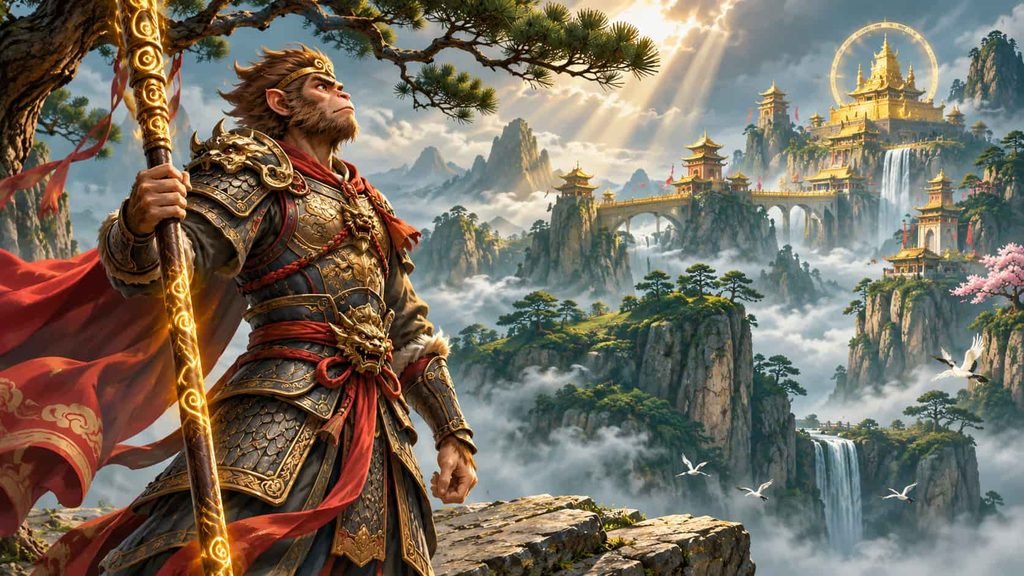
Quick Summary: Black Myth: Wukong review: a 47-hour playthrough verdict on Game Science’s 2024 Chinese mythology action RPG. Combat depth, boss variety, UE5 visuals, and PC performance covered.
Key Takeaways
- Combat: Features a five-stance staff system with a Focus resource and a Sekiro-style dodge rhythm.
- Boss Fights: Includes 81 boss fights across six chapters, featuring the secret Erlang Shen and a hidden true final boss.
- Transformations: Abilities like Yellow Loong and Yin Tiger double as fan service and emergency panic buttons.
- Visuals: Powered by Unreal Engine 5 with Nanite and Lumen, setting the new benchmark for the engine in 2024.
- Score: 8.5/10 — Essential playing if you’ve read Journey to the West or want to see a Chinese AAA studio’s first major attempt.
Introduction
I spent 47 hours completing Black Myth: Wukong across two playthroughs — one on PC with an RTX 3070 and one on PS5 — and I’m still thinking about the Yellow Wind Ridge chapter three weeks later. Game Science’s first AAA release isn’t perfect, but it’s the most ambitious single-player action game out of China in a decade, and the closest any studio has come to translating the chaotic energy of Journey to the West into a modern combat system.
You play as The Destined One, a silent monkey descendant of Sun Wukong retracing the original Monkey King’s path across six chapters of mythological bosses. The game sold 10 million copies in its first three days and 22 million by October 2024, numbers that put it alongside Hogwarts Legacy and Cyberpunk 2077 as one of the fastest-selling single-player games of all time. Whether it deserves that hype is a more complicated question than the Steam reviews suggest.
Gameplay & Combat
Stances and Core Mechanics
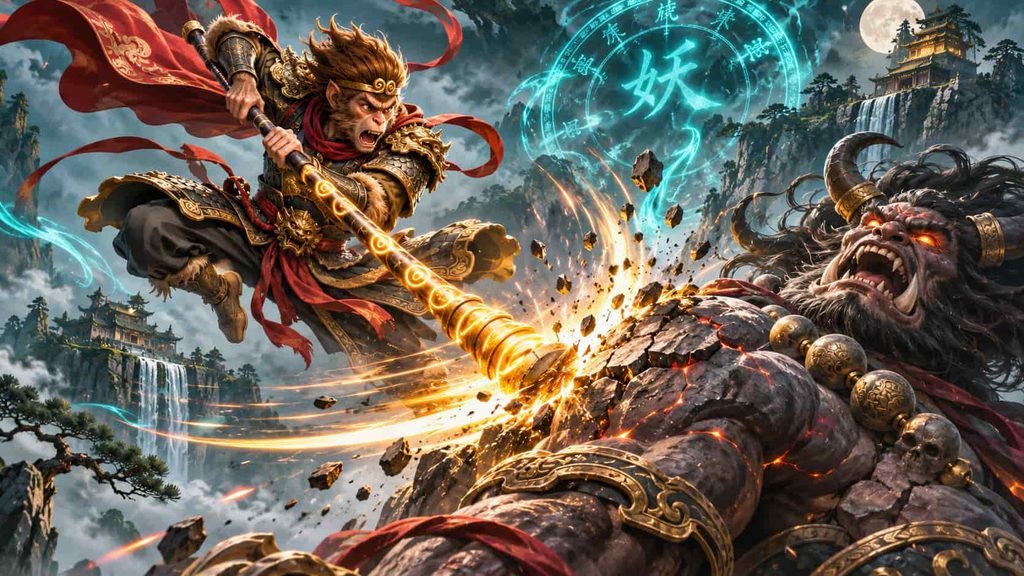
Combat is built around a five-stance staff system — Smash, Pillar, Thrust, and the martial arts stances — that you swap mid-fight. Each stance has its own light and heavy combo tree plus a dedicated heavy attack, and a resource pool called Focus that you build by landing hits and dodges.
- Smash Stance: Spend Focus to land a massive, devastating smash attack.
- Pillar Stance: Drop into this stance to dodge low sweeping attacks while you charge a heavy attack.
- Thrust Stance: Pop the Sprint ability to quickly close distance on a teleporting boss.
It’s Sekiro-adjacent in feel — you can’t turtle behind a shield — but the dodging and staggering rhythms are distinctly Game Science’s own.
Spells and Transformations
On top of the stances, you collect spells and transformations across the campaign:
- Immobilize: Locks an enemy in place for a free combo.
- Cloud Step: Creates a decoy and lets you reposition safely.
- Pluck of Many: Spawns monkey clones that draw enemy aggro.
Transformations like Yellow Loong, Yin Tiger, and Boddhisattva Kang Jin Star let you briefly become a different boss with its own health bar and moveset. This is a fan-service nod to the source material that doubles as a highly effective panic button.
The 81 boss fights are the game’s spine. Most are Yaoguai (demons) drawn straight from the novel, including Tiger Vanguard, the Macaque Chief, and the Hundred-Eyed Daoist Master. Secret bosses include Erlang Shen, who’s locked behind a hidden questline in Chapter 6, and a true final boss you only see if you complete every secret area.
Story & Characters
Narrative Structure
Black Myth: Wukong is less a retelling of Journey to the West than a sequel to it. Sun Wukong is dead at the start — his six senses scattered across the world as relics. Your job is to recover them.
The story is told through painted scrolls, environmental lore tablets, and the boss intros. There is no traditional party, no dialogue trees, and The Destined One never speaks. That choice is faithful to the source material’s idea of the monkey as a force of nature, but it makes the plot hard to follow if you don’t already know the novel. Recommendation: Read a quick Journey to the West summary before playing.
Side Characters and Localization
Where the writing truly shines is in the side characters:
- The Fourth Sister of the Webbed Cave
- The four Loong siblings (Bitter, Light, Blue-Green, White)
- Zhu Bajie (Pigsy), who joins you in Chapter 3 and Chapter 6, voiced with surprising warmth.
However, the localization is rough in spots. Some subtitles are clearly machine-translated, and the English voice cast is uneven — fine in big cutscenes, but jarring in incidental dialogue. If you’re fluent in Mandarin, the original audio track is the way to play.
World & Visual Design
Unreal Engine 5 Visuals
Unreal Engine 5 is the headline technology story here. Black Myth: Wukong uses Nanite for geometry and Lumen for global illumination. On a decent GPU, the result is the best-looking game of 2024. The distinct biomes feature incredible weather, lighting, and creature design:
- Black Wind Mountain’s lush pine forests
- Yellow Wind Ridge’s intense sandstorm corridors
- New Thunderclap Temple’s towering golden Buddhas
Texture work is unusually sharp up close, and the boss models have a level of sculpted detail you normally only see in pre-rendered cinematics.
Level Structure vs. Open World
The level structure is closer to a series of hub-and-corridor zones than a true open world. This is the gap between what Game Science marketed in the early trailers (which implied open-world exploration) and what actually shipped.
Each chapter has a central hub shrine with branching paths to bosses and secrets, but you can’t walk from Chapter 1 to Chapter 6 — they’re connected by cutscene transitions. I don’t mind this; the pacing is tighter than any open-world action game I’ve played this decade, and the backtracking for missed secrets is short. Players who came in expecting Elden Ring’s Lands Between will be disappointed.
Performance & Polish
PC Performance and Patches
On PC at launch, shader compilation stutter was the headline problem. Walking into a new chapter triggered 5–15 second freezes the first time, and the first hour was rough. Game Science patched most of this within the first two weeks. On a recent replay with patch 1.0.13, I had only two stutter events across the entire campaign. Frame generation via DLSS 3 works exceptionally well on RTX 40-series cards.
Console and Handheld Experience
- Steam Deck: Rated Playable, not Verified. You’ll need to drop to medium settings, FSR 2 on Quality, and a 40 FPS cap to keep battery life reasonable (about 90 minutes). It’s playable but not ideal.
- PS5: Runs at a mostly stable 60 FPS in performance mode, with only occasional dips in the Chapter 4 boss arena.
A PS5 or decent PC remains the better platform for the definitive experience.
Pros and Cons at a Glance
Pros
- ✅ Visuals push Unreal Engine 5 — the best-looking game of 2024.
- ✅ 81 boss fights with genuine mechanical variety.
- ✅ Transformation system doubles as fan service and a panic button.
- ✅ Faithful to source material in tone, design, and lore.
Cons
- ✗ Linear chapter structure, not the open world implied by early trailers.
- ✗ No difficulty options — the spike at Chapter 2’s Tiger Vanguard will gate some players.
- ✗ PC performance at launch had shader compilation stutters (now mostly patched).
- ✗ English localization is rough in spots — read subtitles carefully.
Verdict
Black Myth: Wukong is the most important single-player action RPG of 2024, and it’s a better game than the discourse around it. It’s not an open world, it’s not a Sekiro killer, and the localization needs another pass — but the combat system is the deepest staff-action system I’ve played, the boss variety carries the campaign, and the UE5 visuals are the new benchmark for the engine.
It deserved its Game of the Year nomination at The Game Awards 2024 (even though it lost to Astro Bot). I score it 8.5/10. If you’ve read Journey to the West or just want to see what a Chinese AAA studio can do on its first try, this is essential.
Frequently Asked Questions
Is Black Myth: Wukong open world?
No. Each of the six chapters is a hub-and-corridor zone with branching paths to bosses and secrets, but the chapters aren’t connected — you travel between them via cutscene. The early trailers implied open-world exploration, but the shipped game is closer to a Souls-style zone structure.
How long is Black Myth: Wukong?
A first playthrough on a normal pace runs 35–45 hours. Completionist runs (all 81 bosses, all transformations, all secret areas including the Erlang Shen fight) take 60–80 hours. I finished in 47 hours with about 70% of the secrets found.
Is Black Myth: Wukong harder than Sekiro?
Not consistently. Sekiro’s deflect-or-die combat leaves no fallback; Black Myth: Wukong lets you grind for levels, find better staves, and use Immobilize or a transformation to skip a boss’s hard phase. The Chapter 2 Tiger Vanguard spike is the hardest moment for most players.
Does Black Myth: Wukong run well on Steam Deck?
It’s rated Playable, not Verified. You can get a stable 40 FPS with medium settings, FSR 2 on Quality, and a 40 FPS cap. Battery life is about 90 minutes. It’s playable but not ideal — a PS5 or decent PC is the better platform.
Did Black Myth: Wukong win Game of the Year?
No. It was nominated for GOTY at The Game Awards 2024 but lost to Astro Bot. It won Best Action Game and Best Art Direction. The 22 million copies sold by October 2024 made it the best-selling 2024 release regardless of awards.
Sources & References
- Steam Store Page — Black Myth: Wukong (store.steampowered.com, accessed Nov 3, 2026)
- Game Science — Official Black Myth: Wukong site (heishenkong.com, accessed Nov 3, 2026)
- Metacritic — Black Myth: Wukong critic reviews (metacritic.com, accessed Nov 3, 2026)
- IGN — Black Myth: Wukong review (ign.com, accessed Nov 3, 2026)
- The Game Awards 2024 — Nominees list (thegameawards.com, accessed Nov 3, 2026)